
For Animals Rehabilitation and Exercise





Viscosity
The resistance of fluid. Provides 3-dimensional resistance to agonist and antagonist muscle group. The viscosity reduces joint toque during the exercise which is an important concern for the rehabilitation
Temperature
The Warm water induces vasodilation and draw blood in to the target tissues. Increased blood flow delivers more oxygen and nutrients and removes cell wastes. It can also decreases muscle spasm, relaxs tense muscles, relives pain and increase range of motion (ROM).
The Cold water produces vasoconstriction, which slows circulation, reducing inflammation, muscle spasm, and pain.
Turbulence
Turbulence water overload on the skin can disturb peripheral nerves and makes animals forget their pain. It can also increase resistance to the rehabilitation /exercise and also improve animal’s stabilizing abilities

Aquatic Therapy Principal
Hydrostatic pressure
Buoyancy
Viscosity
Temperature
Turbulence
A therapeutic procedure which attempts to improve function through the application of aquatic therapeutic exercises
Aquatic therapy is physical therapy that is performed in the water. Aquatic therapy use the resistance of
water instead of weights. It aims to rehabilitate patients after injury or those with chronic illness, avoiding
the amount of weight placed on the joints by exercise outside the water
Aquatic therapy is an effective treatment for the rehabilitation in both human and animals. Presently, number of scientific articles have been publish about the techniques, pre-post treatment evaluation, and the benefits of the therapy. The significantly increase of using aquatic therapy for the rehabilitation
Aquatic Treadmill is one of the most necessary veterinary instrument tin rehabilitation. It can force animals to use their legs to support their weight and move their legs to walk to the direction we need. From our experiences, swimming pool for animals may be not effective in many cases. Animals when they know that they have floating jacket or supportive. They may not use their legs at all.
Hydrostatic Pressure
Forces from the water perpendicular to the animal body’s surface. Beneficial for decrease swelling,
improve joint position awareness, and improve proprioception of the animals.
P=hydrostatic pressure of the fluid (hPa)
Equation
g=gravitational acceleration
P=gph p= density of the liquid (g/cm3)
h=depth (cm)
(1hPa per cm depth = 100N/m2 =0.01 bar)
Buoyancy
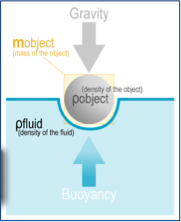
The upward forces from the water that
assists in floating . Beneficial for decreases
the amount of weight bearing of the animal.
which reduces the force of stress placed
Support weight =Weight of the displaced fluid
*Archimedes' principle
